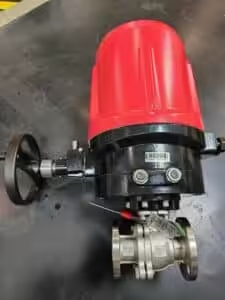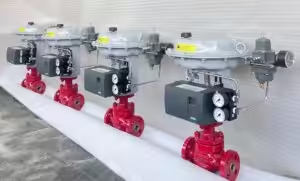
A spring-return electric valve uses stored mechanical spring energy to move to a specified position when actuator power is lost. In a data center, that position must be chosen for the individual fuel or cooling duty. Closing a diesel isolation valve and preserving an essential cooling path solve different problems.
For EPC contractors, MEP teams and fuel-system integrators, the purchase decision therefore starts with the valve tag and shutdown sequence. THINKTANK supplies actuated valve assemblies and supporting fuel-system valves; this guide explains the information needed to turn a general request for a “fail-safe valve” into a testable specification.
Where does a spring-return valve fit in a data center?
| Valve duty | Decision to make | Information to confirm |
|---|---|---|
| Diesel supply isolation | Does this valve close on the specified shutdown demand, actuator power loss, or both? | Fuel-system cause-and-effect, differential pressure and pump-stop sequence. |
| Chilled-water branch isolation | What happens to cooling availability if the branch closes? | Redundancy arrangement, leakage requirement and permitted closure time. |
| Cooling bypass or emergency flow path | Must a flow path remain available after loss of power? | Hydraulic design, required fail position and pump interlocks. |
| Tank outlet fire isolation | Is local temperature-triggered closure also required? | Fire strategy and the role of a separate fusible link valve. |
This is an application review, not a rule that every data-center valve should fail closed. The responsible system designer defines the safe position and sequence for each tag. A valve that operates correctly on its own can still produce an unwanted system response if the shutdown sequence is wrong.
Spring return, fusible link and solenoid: what is the difference?
A mechanical spring-return electric actuator stores energy in a spring during normal operation. Its fail action does not depend on a battery supplying the return-stroke energy. An electric actuator using a battery or capacitor is a different design, even when both products are described as “fail-safe.” Specify the energy source explicitly.
A fusible link valve responds locally when heat releases its temperature-rated link. An electric spring-return assembly responds to the electrical conditions defined by its wiring and controls. A remote fire-alarm command must be connected through the approved shutdown circuit; a spring by itself does not detect smoke or fire.
A solenoid valve is another option for suitable fuel duties. Where available differential pressure is low, check the valve’s minimum operating differential rather than assuming every pilot-operated solenoid will function. Our zero-differential solenoid valve article addresses this selection point.
What should a valve datasheet say beyond voltage and pipe size?
- Medium and operating envelope: identify diesel grade or water/glycol mixture, normal and maximum temperatures, design pressure, and maximum differential pressure during travel.
- Valve construction: specify body and trim materials, seat compatibility, flange standard, pressure class, required shutoff performance and installation orientation.
- Two travel times: state the acceptable powered travel time and spring-return time separately. Check the effect of rapid closure on the liquid system before choosing the fastest actuator.
- Torque throughout the stroke: review valve breakaway, running and seating torque against both powered and spring torque, including the selected sizing allowance and temperature effects.
- Controls and feedback: define supply voltage, command signal, emergency trip input, open/closed indication and response to communication loss.
- Environment and access: identify indoor or outdoor location, condensation, hazardous-area requirements, cable entry, manual-override access and maintenance clearance.
THINKTANK’s spring-return electric actuator technical page includes the published TTS-R range, mounting dimensions and operating options. Use that information to shortlist a configuration, then confirm the complete valve-and-actuator combination against the project duty.
A BMS command is not proof that the valve reached its position
The building management system can issue a close command while an isolator is off, a coupling is loose, or an actuator is locked for maintenance. Specify actual end-position feedback and the expected alarm when the commanded position is not reached within the agreed time. Identify how a loss of feedback power will appear at the control panel.
Also define restart behavior. After a power interruption, should the valve reopen automatically, remain in its safe position until reset, or wait for another permissive? This decision belongs in the cause-and-effect document and must match the selected actuator circuit.
What should be demonstrated at factory acceptance testing?
| Check | What the record should show |
|---|---|
| Assembly identification | Valve tag, valve and actuator models, orientation, wiring drawing revision and fail direction. |
| Powered travel | Opening and closing travel, local indication, end-position contacts and measured stroke times. |
| Loss of actuator power | Movement from the operating position to the specified fail position, with measured return time. |
| Shutdown command | The actual trip-input behavior defined in the approved circuit, tested separately from communication loss. |
| Override and reset | Documented manual-override behavior and a demonstrated return to automatic service. |
| Valve pressure and seat tests | The agreed test standard, medium, pressure, duration and acceptance result for the supplied valve. |
Agree which checks are performed under representative mechanical load or differential pressure. An unloaded actuator demonstration alone does not establish shutoff capability at the project’s maximum differential pressure. Site commissioning must also verify pump, alarm and system interlocks that are outside a standalone factory test.
How THINKTANK supports the complete fuel-system package
A fuel system also needs properly selected manual isolation, check valves, strainers, pressure relief and tank venting. THINKTANK’s published Malaysia delivery case records an ahead-of-schedule shipment of 898 ball valves and describes the wider valve range supplied for the Canary Bridge Data Centre project. This gives buyers a concrete example of coordinated supply across several valve duties.
For local thermal isolation, our FSV API 607 fire-test announcement provides a further starting point for document review. Match the certificate and test scope to the proposed model; the fusible element, valve fire test and electric actuator each have their own function and documentation.
Request a data-center valve review
Send THINKTANK the valve schedule or P&ID, fuel or cooling duty, design pressure and temperature, required fail position, supply voltage, travel-time limits, control diagram and project document list. If the cause-and-effect is still being developed, identify the open decisions so they can be reviewed before model selection.
Contact THINKTANK for a valve-and-actuator selection review, or see the Data Center Fuel System Valve Package for the broader supply scope.