Total Words: approximately 2,800 words
Estimated Reading Time: approximately 11-14 minutes (based on 200-250 words/minute)
For complete valve package support in data center diesel generator fuel systems, visit our Data Center Fuel System Valve Package page.
Executive Summary
As the digital economy accelerates, data centers have become a significant driver of global energy consumption. According to the International Energy Agency (IEA)[^1], data centers account for approximately 1-1.5% of total global electricity demand—a proportion growing at over 20% annually amid the AI computing boom. Traditional data centers face intensifying constraints: scarce land resources, rising energy costs, and diminishing freshwater supplies for cooling. A fundamentally new technological approach—Underwater Data Centers (UDC)—is transitioning from concept to commercialization. Simultaneously, hydrogen as a clean energy carrier is emerging as a complementary power source for data centers, jointly driving a paradigm shift in data center energy architecture.
This article provides a systematic examination of UDC technology principles, global project progress, commercialization challenges, and prospects, alongside an in-depth analysis of hydrogen’s role in data center energy transition—offering industry practitioners a comprehensive reference framework.
1. Underwater Data Centers: From Concept to Commercialization
1.1 Technology Principles and Core Advantages
The fundamental principle of underwater data centers involves deploying server modules on the ocean floor, utilizing seawater for natural cooling to substantially reduce thermal management energy consumption.
According to Microsoft’s Project Natick testing[^2], underwater data centers can achieve a Power Usage Effectiveness (PUE) below 1.1, significantly outperforming traditional land-based facilities at 1.5-2.0[^7]. This represents the most critical technical advantage of underwater data centers.
Space Savings and Site Flexibility constitute another major advantage. Data centers no longer require extensive land area; theoretically, any body of water becomes a potential deployment location. For coastal cities and economically developed regions facing acute land scarcity, this characteristic holds substantial strategic value.
High Availability and Reduced Failure Rates merit equal attention. Early Microsoft testing indicated[^2] that server failure rates in underwater environments were approximately one-eighth of those in conventional data centers, attributable to the stable temperature conditions and low corrosion environment within sealed modules.
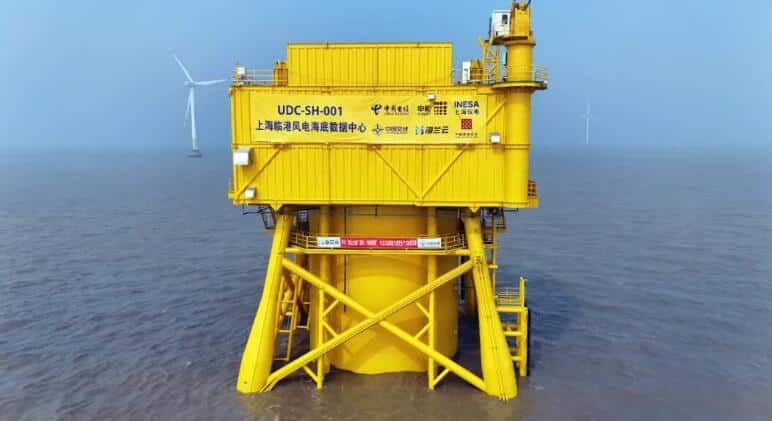
1.2 Technical Challenges and Engineering Complexities
However, underwater data centers confront a series of formidable engineering challenges:
Sealing and Corrosion Protection presents the primary technical hurdle. Seawater is highly corrosive; modules must withstand immense water pressure (approximately 1 additional atmosphere for every 10 meters of depth) while preventing seawater ingress. Microsoft Project Natick employed high-pressure nitrogen sealing technology[^2], maintaining slight positive pressure within the module relative to external seawater to block infiltration.
Deployment and Operations present equal complexity. Individual server modules can weigh hundreds of tons, requiring specialized marine vessels and equipment for deployment. Once submerged, any hardware maintenance or upgrades become extraordinarily difficult—emerging as a critical constraint limiting project development.
Networking and Power Supply represent additional key challenges. Underwater data centers require submarine cable connectivity to land-based network backbones, while power supply depends on terrestrial grids or offshore generation facilities.
2. Global Project Progress: Microsoft’s Pause and China’s Advancement
2.1 Microsoft Project Natick: The End of Technical Validation and Its Legacy
Microsoft Project Natick stands as the most representative exploration initiative in the global underwater data center field[^2]. Launched in 2015, the project deployed its first pilot module, “Northern Isles,” in the waters off Scotland’s Orkney Islands in 2018, followed by a second pilot module off the California coast in 2020.
However, in June 2024, Microsoft formally confirmed the cessation of global deployment plans[^2] for the project. This decision stemmed not from technical failure but from comprehensive considerations regarding commercial viability, operational limitations, and shifting industry priorities.
Four Core Reasons for Microsoft’s Decision:
- Critical Limitation: Inability to Perform Hardware Maintenance and Upgrades. Once sealed modules are submerged, physical maintenance becomes impossible. Server failures cannot be addressed on-site; hardware can only be replaced by hoisting the entire module ashore, resulting in excessive operational costs and extended response times.
- The Weakest Link Effect: Irreplaceable Critical Components. Even when individual components (such as hard drives or power modules) fail, replacement remains impossible without breaching the seal. The computational capacity of the entire module can only degrade over time.
- Upgrade Lag: GPU Iteration Cycles Mismatch Design Lifespan. Current GPU iteration cycles have shortened to under 2 years, while UDC module design life spans approximately 5 years. After 5 years, internal hardware becomes obsolete, unable to keep pace with rapid computational demand evolution.
- Excessive Scale-Up Costs. Specialized module manufacturing, deep-sea deployment operations, and post-deployment maintenance collectively exceeded original cost projections. Meanwhile, energy-saving technologies in land-based data centers (such as liquid cooling and immersion cooling) continue advancing, progressively diminishing the marginal returns of underwater approaches.
- AI Era Strategic Shift: The demand profile for hyperscale AI clusters has shifted; Microsoft redirected strategic focus toward large-scale land-based data center construction, significantly reducing demand for distributed small-scale computing units.
The Project’s “Reincarnation”[^2]—Although Project Natick itself was discontinued, Microsoft applied substantial research outcomes to next-generation land-based data center construction. The most valuable technical legacies include high-pressure nitrogen sealing technology, extreme environment reliability design experience, and immersive liquid cooling solutions.
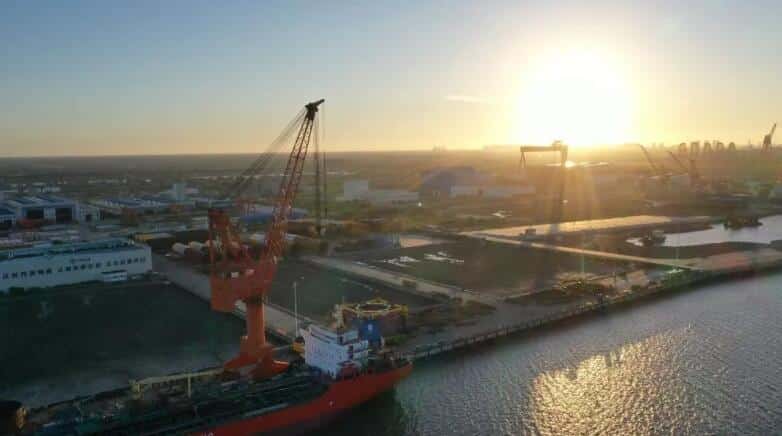
2.2 China’s UDC Projects: Innovative Solutions for Energy and Space
Diverging from Microsoft’s technical validation approach, China’s underwater data center projects have from the outset prioritized solving practical energy and space challenges, demonstrating a distinctly different development logic.
The world’s first commercial underwater data center successfully commenced operations in 2022 in Lingshui County, Hainan Province, led by Beijing Halo Data Technology Co., Ltd.[^3]. The project’s first phase deployed 5 underwater data modules, encompassing approximately 2,000 racks.
Since 2024, China’s UDC projects have entered an accelerated promotion phase. Beyond the Hainan project, coastal cities including Xiamen, Shenzhen, Shanghai, Ningbo, and Qingdao are actively planning or constructing underwater data centers. In early 2026, Shanghai’s Lingang region launched the “Direct Offshore Wind Connection” pilot project[^4]—transmitting green power directly from offshore wind farms to underwater data centers via submarine cables, achieving integrated “offshore wind + underwater computing” operations.
Core Drivers Behind China’s Continued UDC Advancement:
- Extreme Resource Mismatch: Eastern China’s coastal regions face acute land scarcity, while data centers are major water consumers (primarily for cooling). Underwater solutions address land constraints while utilizing seawater for natural cooling, substantially reducing freshwater consumption.
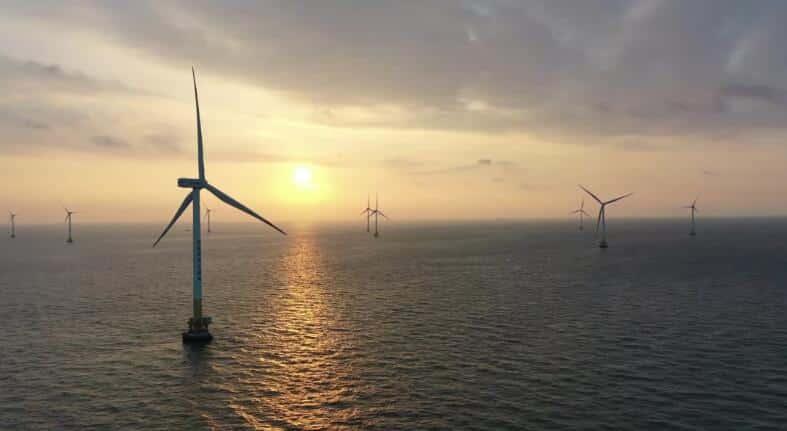
- Direct Energy Connection Advantage: China possesses the world’s largest offshore wind installation capacity[^8]. Underwater data centers can directly absorb offshore wind power, achieving “source-computing integration.” The Shanghai Lingang “Direct Wind Connection” case in early 2026 exemplifies this model[^4].
- “Eastern Data, Western Computing” Strategic Complement: Although the “Eastern Data, Western Computing” initiative transfers computing capacity to energy-rich western regions to balance energy consumption, latency-sensitive businesses (such as financial trading, real-time gaming, and edge inference) cannot tolerate long-distance transmission. Coastal city underwater data centers can supplement this strategy, meeting low-latency business requirements.
- Business Model Innovation: The “data real estate” model is emerging as China’s mainstream commercial pathway for UDC—utilizing modular design to divide data modules into independent “computing units,” enabling flexible deployment and scaling based on customer needs. Modular approaches effectively alleviate operational challenges; certain modules can undergo routine maintenance at surface platforms.
3. Microsoft Project Natick vs. China UDC: A Comparative Path Analysis
| Dimension | Microsoft Project Natick | China UDC Projects |
|---|---|---|
| Primary Positioning | Pure technical validation | Energy and space solutions |
| Power Source | Traditional land-based grid | Offshore wind/direct green power |
| Application Scenario | Distributed small-scale computing | AI computing center clusters |
| Core Driver | Failure rate reduction | Bypassing land/energy quota constraints |
| Project Status | Paused June 2024 | Accelerated advancement |
| Commercialization Path | Technical feasibility validation | Modular data real estate model |
| Operations Model | Fully sealed, non-maintainable | Modular, surface-maintainable |
| Strategic Significance | Frontier technology exploration | Energy-computing integration |
4. Hydrogen Power: Emerging Energy Supplementation for Data Centers
4.1 The Technical Logic of Hydrogen Entering Data Center Energy Systems
In data center energy transition, hydrogen is emerging as a novel supplementation solution. Its core logic: hydrogen can be produced through water electrolysis, achieving genuine “green electricity” conversion; combustion produces only water vapor with zero carbon emissions; and energy density (approximately 100 times that of lithium batteries) makes it suitable for backup power or off-grid supply scenarios.
Primary Application Scenarios for Hydrogen in Data Centers include:
- Backup Power and Emergency Supply. Traditional data centers typically rely on diesel generators for backup power—high carbon emissions and significant noise. Hydrogen fuel cells can provide clean, silent backup power solutions.
- Off-Grid Data Center Power Supply. For islands, remote areas, and scenarios with inadequate grid coverage, hydrogen can combine with renewable energy (solar, wind) to form “green hydrogen + green electricity” off-grid supply systems.
- Peak Shaving and Load Balancing. Hydrogen energy storage (electrolysis + fuel cells) can serve as large-scale energy storage, enabling temporal-spatial regulation of data center power loads.
4.2 Commercialization Progress and Challenges
Currently, hydrogen applications in the data center sector remain in early stages. According to IEA reports[^5], current green hydrogen (electrolysis-produced) unit costs approximately $4-6 per kilogram, while gray hydrogen (natural gas-produced) runs approximately $1-2 per kilogram. With continued renewable energy cost reductions and electrolysis technology advancement, green hydrogen costs are expected to drop below $2 per kilogram by 2030[^8].
Primary challenges include:
- Cost Issues: Green hydrogen production costs currently run approximately 2-3 times higher than gray hydrogen[^5]; large-scale application economics remain unconvincing
- Technology Maturity: Large-scale hydrogen storage system reliability and response speed require further validation
- Safety Standards: Hydrogen storage and use involve stringent safety standards (such as ISO 19880[^6]) and approval processes
- Infrastructure: Hydrogen refueling stations, pipeline networks, and related facilities remain underdeveloped
5. Conclusions and Outlook
5.1 UDC Commercialization Prospects Assessment
Commercialization prospects for underwater data centers require cautiously optimistic assessment.
On one hand, China’s market’s unique conditions provide favorable soil for UDC development: scarce land resources, strong green electricity demand, robust manufacturing infrastructure, and clear policy support. UDC projects in coastal cities such as Shanghai, Xiamen, and Hainan are demonstrating this pathway’s feasibility.
On the other hand, core challenges facing UDC globally—particularly operational difficulties and hardware iteration mismatches—remain fundamentally unresolved. Microsoft’s pause decision serves as an industry alert: technical feasibility does not equal commercial viability.
5.2 Industry Development Recommendations
- Modular Design is Key to Commercialization. Dividing data modules into independently maintainable units can significantly reduce operational difficulties and lifecycle costs.
- “Green Power + Computing” Integration is Differentiated Competitiveness. Compared to land-based data centers, UDC’s core value lies not in technological advancement but in directly absorbing offshore wind power and resolving land and energy quota constraints.
- Hydrogen Applications Require Long-Term Planning. Hydrogen’s role in data center energy systems is more likely “long-term supplementation” rather than “short-term replacement.” Industry participants should monitor technological progress and complete technical reserves before cost inflection points arrive.
- Latency-Sensitive Businesses are UDC’s Target Scenarios. Financial trading, real-time gaming, edge inference, autonomous driving, and other low-latency businesses represent UDC’s most suitable target markets.
Frequently Asked Questions (FAQ)
Q1: What is the construction cycle for underwater data centers?
A1: Traditional land-based data centers typically require 18-24 months from planning to operation. Underwater data center construction cycles run slightly longer, primarily affected by marine engineering operations and approval processes. Individual data module construction takes approximately 6-12 months, with complete projects potentially requiring 2-3 years.
Q2: How many servers can an underwater data center accommodate?
A2: This depends on module specifications. Taking the Hainan Lingshui project as an example[^3], a single underwater data module can accommodate approximately 400 racks and 8,000-10,000 servers. With technological progress, larger modules are under development.
Q3: Can underwater data centers withstand typhoons and tsunamis?
A3: Modern UDC projects fully consider extreme marine environments during design. Modules typically employ high-strength steel or composite materials capable of withstanding pressures above design water levels. Deployment locations generally select nearshore areas at 20-50 meter depths, avoiding major shipping lanes and frequent marine hazard zones.
Q4: What is the current cost of hydrogen power generation?
A4: According to IEA reports[^5], current green hydrogen (electrolysis-produced) unit costs approximately $4-6 per kilogram, while gray hydrogen (natural gas-produced) runs approximately $1-2 per kilogram. With continued renewable energy cost reductions and electrolysis technology advancement, green hydrogen costs are expected to drop below $2 per kilogram by 2030.
Q5: Who are the main operators of China’s UDC projects?
A5: Major participants include Beijing Halo Data Technology Co., Ltd.[^3], Huawei Cloud, and Alibaba Cloud. Halo Data Technology serves as the operator of the Hainan Lingshui project, while Huawei and Alibaba explore related technological solutions.
References
[^1]: International Energy Agency (IEA) – https://www.iea.org/
Support Data center electricity consumption as 1-1.5% of total global electricity
[^2]: Microsoft Project Natick – https://azure.microsoft.com/en-us/solutions/
Support UDC PUE data, failure rate data, project timeline, high-pressure nitrogen sealing technology, June 2024 pause decision
[^3]: Beijing Halo Data Technology Co., Ltd. – https://www.halodata.com.cn/
Support Hainan Lingshui project scale (5 underwater modules, ~2,000 racks)
[^4]: Shanghai Lingang Region Government – https://www.lingang.gov.cn/
Support “Direct Offshore Wind Connection” pilot project launch (early 2026)
[^5]: International Energy Agency (IEA) – https://www.iea.org/reports/the-future-of-hydrogen
Support Green hydrogen vs. gray hydrogen cost comparison data ($4-6/kg vs $1-2/kg)
[^6]: ISO 19880 – https://www.iso.org/standard.php
Support International standards reference for hydrogen valves
[^7]: U.S. Department of Energy – https://www.energy.gov/
Support Land-based data center PUE industry benchmark data (1.5-2.0)
[^8]: Market Research Institutions – Various industry reportsSupports: China’s offshore wind installation capacity, 2027 data center market size projection, green hydrogen cost decline forecast
Note: Specific figures and project information in this article are based on publicly available official sources. Some data represents industry consensus or analytical estimates. For updates or corrections, please contact THINKTANK.