The real value behind valve selection is not always visible.
In the valve industry, the longer we work with real projects, the more respect we have for engineering details. Valve selection is never only about material, size, pressure rating, temperature, and connection standard. These are the visible parameters. In many real applications, the factors that truly determine valve safety and reliability are often hidden behind the datasheet.
Process conditions, piping layout, discharge direction, medium behavior, pressure drop, back pressure, installation space, operating frequency, and abnormal operating scenarios can all affect whether a valve will perform correctly in service.
For general industrial valves, incorrect selection may lead to leakage, wear, shortened service life, or higher maintenance costs. But for safety-related products such as safety valves, emergency shut-off valves, flame arresters, and breather valves, one overlooked detail may affect the safety boundary of the entire system.
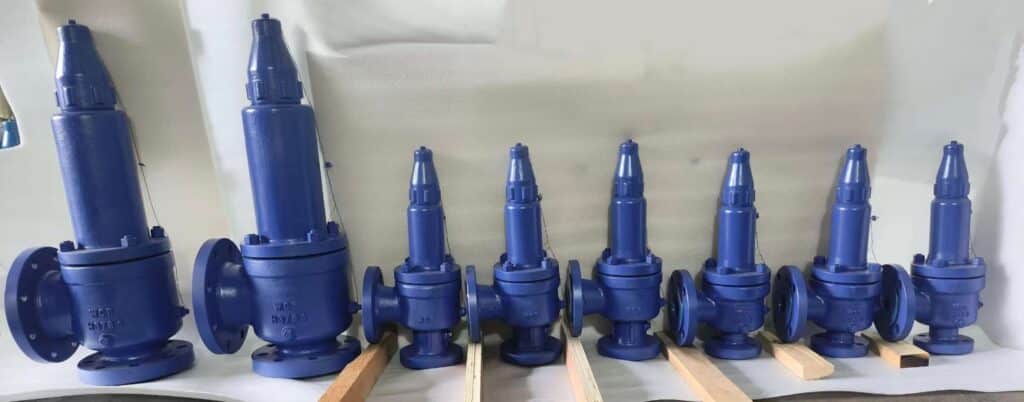
A Safety Valve Is Not Just a Set Pressure
Safety valve selection may look straightforward at first.
In most inquiries, the customer provides the medium, set pressure, operating pressure, temperature, required relieving capacity, material, connection standard, inlet size, and outlet size. In many cases, the customer may also clearly confirm that there is no back pressure at the site.
However, “no back pressure” under normal operating conditions does not always mean there will be no back pressure during actual relieving.
Some systems have no constant back pressure during normal operation. But when one or more safety valves start discharging, the discharge piping, common header, elbows, pipe size, discharge distance, outlet condition, and flow resistance may generate built-up back pressure during the relieving process.
This type of back pressure is not a static condition. It is created dynamically when the safety valve opens and the system begins to relieve.
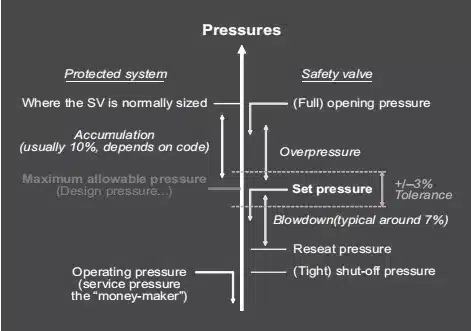
If the safety valve is selected only according to the visible parameters provided in the inquiry, without further review of the discharge system and piping arrangement, this critical risk may be missed.
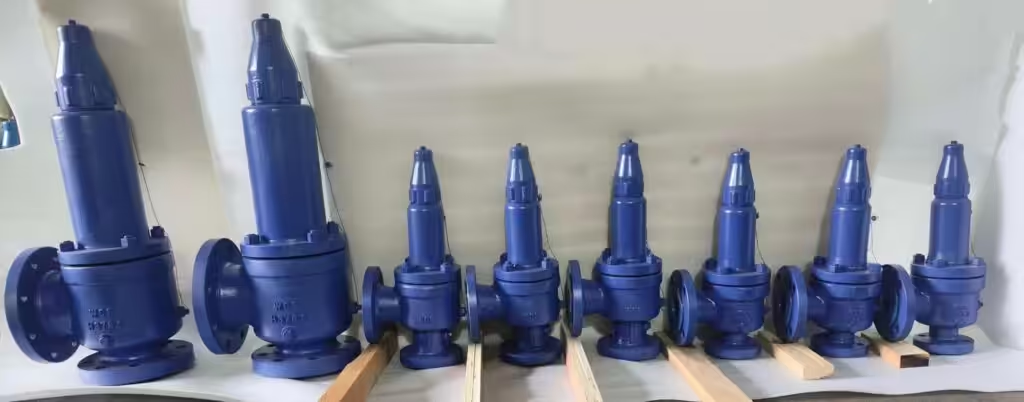
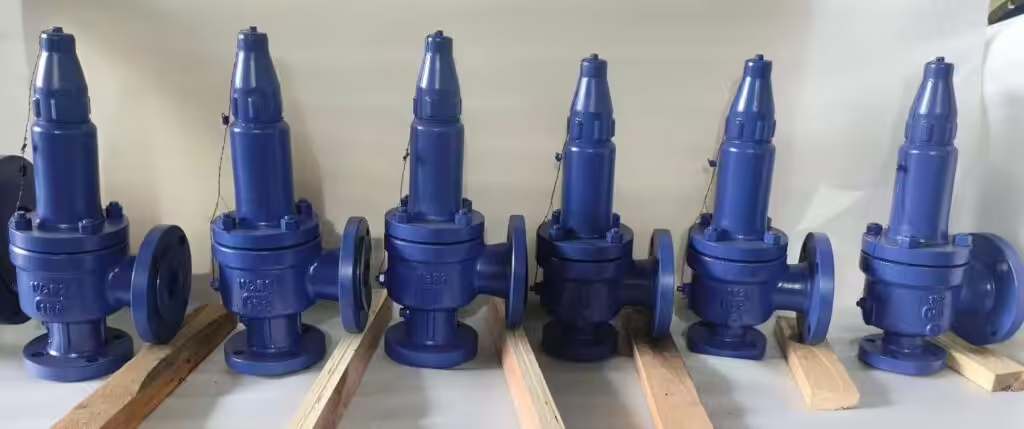
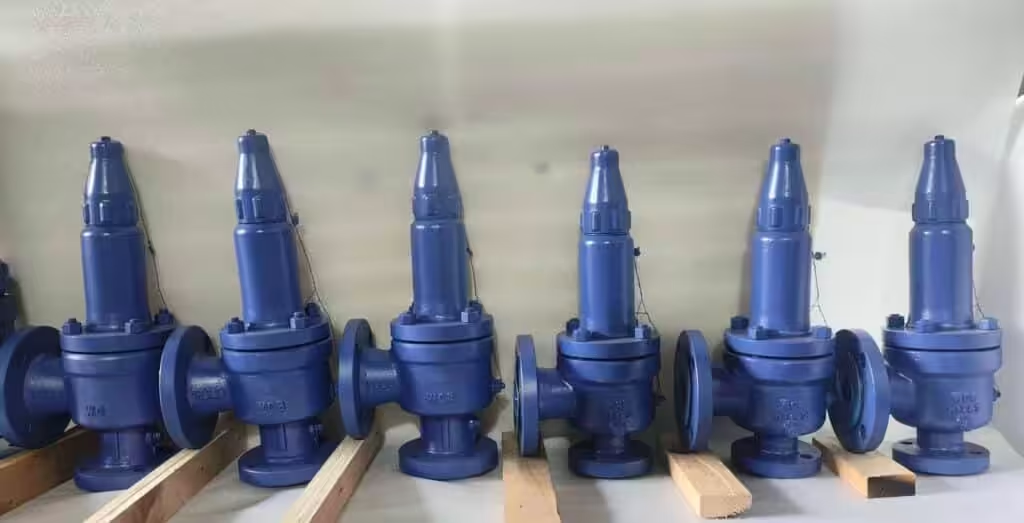
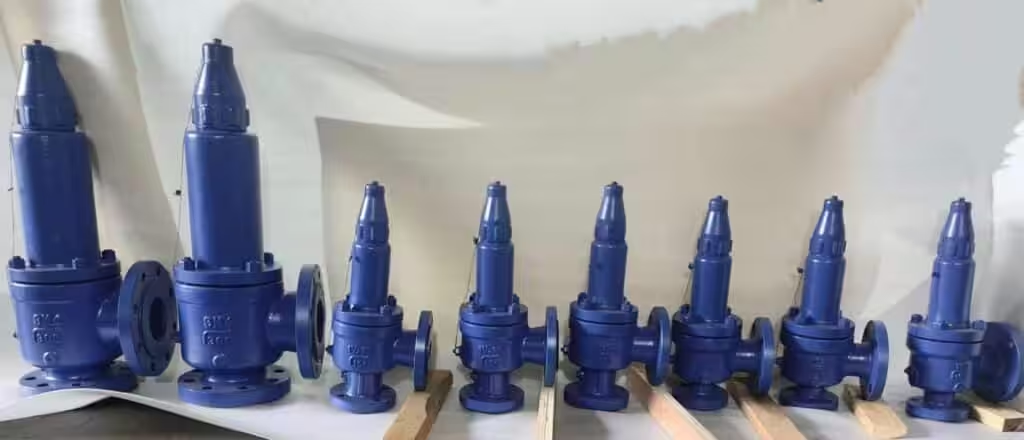
In a recent batch safety valve project, the customer confirmed during the selection stage that there was no back pressure. However, after a deeper review of the design conditions and discharge arrangement, we found that the system could generate built-up back pressure during actual relieving.
This kind of issue is not easy to identify from a simple datasheet. It can even be overlooked by many valve manufacturers during routine quotation and quick model selection.
On the surface, the valve parameters may appear complete. The size, pressure class, material, set pressure, and connection standard may all look correct. But the real question is not only whether the valve can be manufactured according to the datasheet.
The more important question is:
Will the safety valve open correctly, discharge stably, and reseat properly when the system truly needs protection?
What Is Built-Up Back Pressure in Safety Valve Applications?
Back pressure is the pressure that exists at the outlet side of a safety valve or pressure relief valve. In real applications, back pressure may come from different sources.
Superimposed back pressure exists before the valve opens. It may come from a closed discharge system, flare header, or other connected equipment.
Built-up back pressure is different. It is generated after the safety valve opens, as a result of flow through the valve outlet, discharge pipe, elbows, silencer, header, or other downstream restrictions.
This is why a system can appear to have “no back pressure” during normal operation, but still generate back pressure during emergency relieving.
For safety valves, this distinction is very important. If the built-up back pressure is not considered during selection, it may affect valve opening behavior, relieving capacity, stability, and reseating performance. In severe cases, the valve may chatter, discharge insufficiently, or fail to protect the equipment as expected.
This is why safety valve selection should not stop at the set pressure.
A proper review should also consider the discharge path.

The Hidden Engineering Behind a Valve
The price of a valve is visible. The engineering judgment behind the valve is not.
Two safety valves may have the same size, material, pressure rating, and set pressure, but their internal design, spring selection, flow capacity, back pressure tolerance, discharge calculation, manufacturing precision, and testing requirements may be completely different.
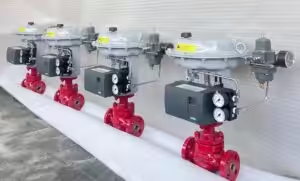
The same applies to control valves. The difficulty is not only the Cv value. Flashing, cavitation, noise, velocity, rangeability, actuator thrust, positioner response, and control logic can all determine whether the valve will actually perform well in the field.
For breather valves and flame arresters, the key is not only the flange size or connection type. Tank operating conditions, vapor characteristics, pressure and vacuum settings, flame element pressure drop, deflagration or detonation risk, and the effect on normal tank breathing must all be considered.
These hidden factors may not appear directly on a purchase list, but they often decide whether the valve will be reliable in real operation.
Why Valve Selection Cannot Depend Only on Datasheets
In many projects, the customer may not be the front-line process engineer. The information they receive may be incomplete, simplified, or not fully accurate.
This is common in international projects. A purchaser may receive a valve list from an engineering team. A distributor may receive only partial data from the end user. An EPC project may pass through several communication layers before the valve supplier receives the inquiry.
By the time the inquiry reaches the valve manufacturer, some important information may already be missing.
That is why a valve supplier should not only quote mechanically based on a datasheet. A responsible supplier needs to review the application, question unclear conditions, identify contradictions, and evaluate hidden risks before confirming the final selection.
For safety valves, this review may include:
- Whether the relieving scenario is clearly defined
- Whether the required capacity is based on actual process conditions
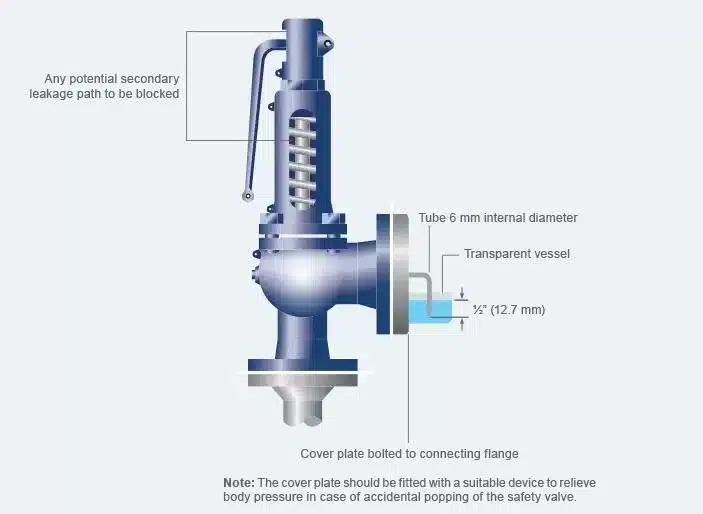
- Whether the discharge piping may create built-up back pressure
- Whether multiple valves may discharge into a common header
- Whether the outlet pipe size and discharge direction are suitable
- Whether the valve type is appropriate for the back pressure condition
- Whether the valve can open, relieve, and reseat correctly under real operating conditions
Where variable back pressure is present, a bellows back-pressure balanced safety valve is one configuration engineers may evaluate; final selection still depends on the complete relieving case and project specification.
These details may look small during quotation, but they can become critical during operation.
Why Price Alone Cannot Explain Valve Value
In project discussions, we sometimes hear customers say, “Your price is higher.”
In many cases, this is not really a point worth arguing about. If we only compare the product name, outside appearance, material, size, and pressure rating, many valves may look similar.
But the real differences in the valve industry are often not visible at first glance.
A low price can be offered quickly. A standard model can also be matched quickly. But if the process condition, piping layout, medium behavior, discharge system, and abnormal operating scenario are not properly reviewed, the risk is not eliminated. It is only hidden.
For a safety valve, if the valve fails to open correctly when pressure relief is required due to back pressure, discharge resistance, or incorrect system assumptions, the consequence is no longer just the difference in valve price.
It may lead to equipment overpressure, plant shutdown, production loss, environmental impact, or even a serious safety incident.
This is why the value of a valve should not be measured only by the purchase price.
A truly valuable valve supplier does not simply sell a product. A responsible supplier helps the customer identify potential risks, correct technical blind spots, and reduce the possibility of system failure before the valve is installed on site.
THINKTANK’s Approach: From Valve Selection to Risk Prevention
At THINKTANK, we believe valve selection is not only a product-matching process. It is an engineering review process.
When dealing with safety valves, control valves, breather valves, flame arresters, severe service valves, high-temperature valves, and high-pressure applications, we do not only look at the parameters provided in the inquiry. We also try to understand the real operating conditions behind those parameters.
We pay attention to questions such as:
Is the operating condition complete?
Are there any contradictions between the listed parameters?
Could there be hidden back pressure, pressure drop, or velocity problems?
Is the valve suitable for the actual installation direction and piping layout?
Will the valve still work reliably under abnormal or emergency conditions?
Does the selected valve truly meet the safety requirements of the system?
Many risks are not visible in the first quotation stage. They only become visible when the supplier has enough engineering experience to review the application beyond the surface information.
This is why THINKTANK continues to invest in valve engineering capability, selection expertise, design review, simulation, technical analysis, and project risk assessment.
We believe a good valve supplier should participate in risk identification, not only price competition.
A Valve Is a Product. A Correct Valve Solution Is Protection.
A valve is a product.
But a correct valve solution is a form of protection for the customer’s equipment, process, personnel, and long-term operation.
Some value does not appear directly on the quotation sheet.
It appears in a more careful parameter review.
It appears in a second check of the discharge system.
It appears in identifying a back pressure risk that could easily be ignored.
It appears in preventing a possible site problem before it happens.
Because selling valves is not only about selling products.
More importantly, it is about helping customers see the risks they may not see yet, and helping their systems build a safer and more reliable operating boundary before the project reaches the site.
Conclusion
Safety valve selection is not only about set pressure, size, material, and pressure rating.
Behind every reliable valve solution, there should be engineering review, application understanding, and risk prevention.
For critical applications, especially safety-related systems, the real value of a valve is not only in the product itself. It is in whether the supplier can help the customer identify hidden risks before they become real problems.
That is where professional valve engineering creates value.