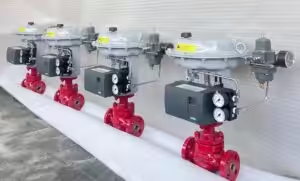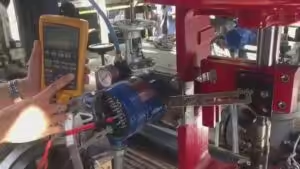
Engineering considerations beyond materials and pressure rating
Engineers often ask:
“What are the best suppliers of industrial control valves for chemical plants?”
In practice, this question rarely leads to reliable valve selection.
In chemical plants, control valves fail not because of brand choice alone, but because process behavior, valve design limits, and maintenance reality were not aligned at the selection stage. This article explains how experienced engineers evaluate control valves for chemical service—and why engineering depth matters more than brand reputation.

Why Chemical Plant Applications Are Different
Chemical plants impose long-term stress on control valves due to:
- Continuous or semi-continuous operation
- Corrosive or reactive media
- Fouling, polymerization, or crystallization
- Pressure and temperature cycling
- Limited shutdown opportunities
Unlike utility systems, a chemical control valve is not a passive component. It must regulate flow accurately while resisting chemical attack and mechanical wear over long operating periods.
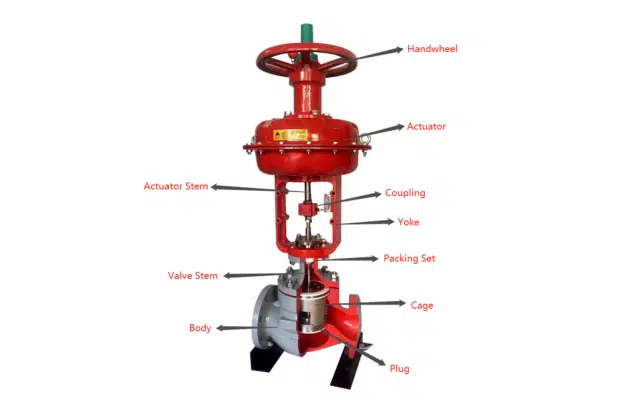
Common Failure Modes in Chemical Control Valves
Field experience shows that most failures fall into a few categories:
Packing and stem leakage
Aggressive media and frequent modulation accelerate packing wear, often becoming the first visible failure point.
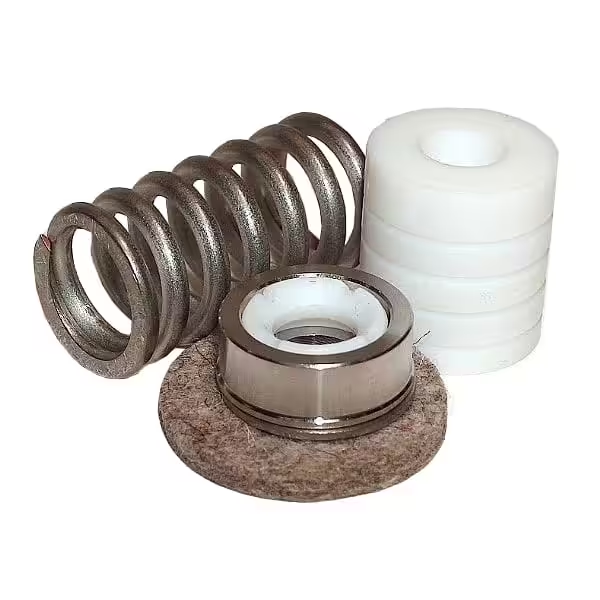
Trim damage or blockage
High velocity, flashing, or solids can erode trim, while deposits may gradually restrict movement and degrade control accuracy.

Cavitation and flashing
Pressure drop is often underestimated during upset or partial-load conditions, leading to noise, vibration, and internal damage.
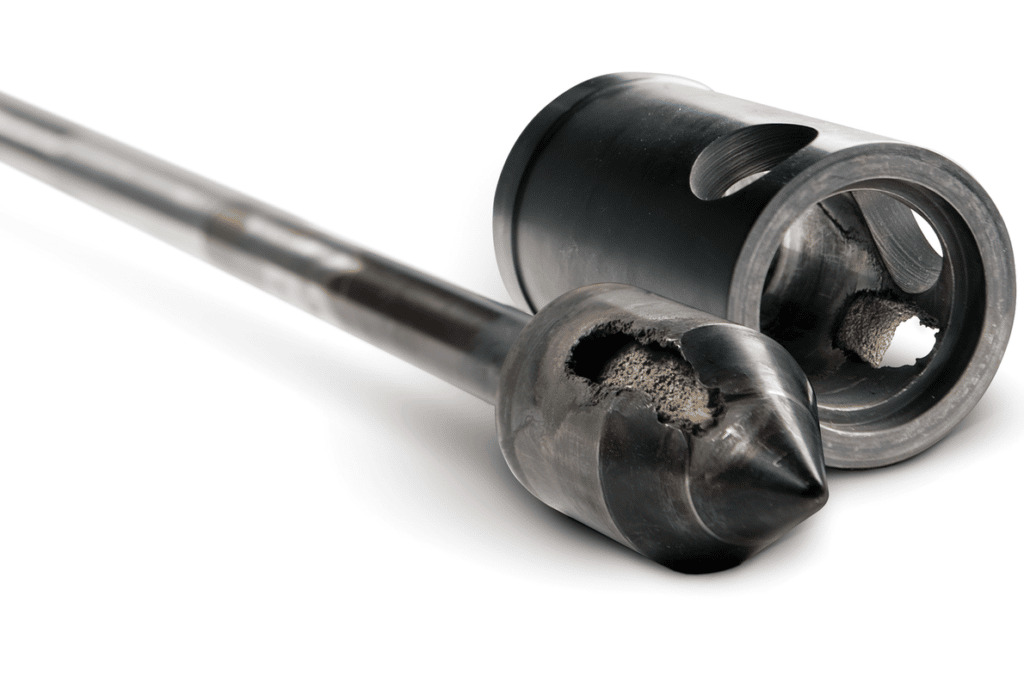
These issues are rarely solved by oversizing the valve or choosing a stronger alloy alone.
Why Material Selection Alone Is Not Enough
Chemical valve selection is often reduced to material compatibility. While material choice is necessary, it is not sufficient.
Service life is equally influenced by:
- Trim geometry and flow direction
- Seat loading method
- Valve characteristic selection
- Accessibility for maintenance
Two valves made from the same material can perform very differently depending on these design decisions.
Typical Field Case: High-Temperature and High-Sulfur Chemical Service
In chemical and petrochemical processes, high temperature is often combined with sulfur-containing media, creating one of the most demanding environments for control valves.
In S-Zorb gasoline desulfurization service and high-H₂S chemical units—where sulfur content can exceed 8% by volume—valves are exposed to continuous thermal stress, abrasive flow, and aggressive chemical attack. Early assumptions often focus on upgrading body material alone. However, field experience shows that sealing design and wear resistance are usually the real limiting factors.
In these applications, stable operation was achieved not by increasing valve size or actuator force, but by optimizing hard-seated sealing systems, wear-resistant trim design, and surface treatment suitable for long-term high-temperature service. This approach significantly reduced leakage risk and maintained control stability under continuous operation.
Engineering takeaway:
In high-temperature, high-sulfur chemical service, sealing and trim design often determine valve reliability more than base material selection alone.

How Experienced Engineers Evaluate Valve Suppliers
Instead of asking “Which brand is best?”, experienced engineers ask:
- Does the supplier understand chemical process behavior?
- Is the valve designed for repair, not just replacement?
- Is the trim suitable for real pressure drop conditions?
- Are spare parts standardized and available long-term?
In chemical plants, reliable suppliers tend to ask more technical questions—not fewer.
Engineering Perspective from THINKTANK
THINKTANK approaches chemical plant control valves from a process-first engineering perspective:
- Valve sizing focuses on control stability rather than maximum flow
- Trim selection considers erosion, fouling, and part-load operation
- Designs emphasize maintainability and standardized spare parts
- Material selection is integrated with sealing and trim strategy
This approach supports predictable long-term operation in plants where downtime and maintenance access are critical constraints.

When Supplier Choice Becomes Critical
Supplier capability matters most when:
- Process conditions vary widely from design assumptions
- Media properties change over time
- Shutdowns are infrequent
- Local maintenance resources are limited
In these cases, the real difference between suppliers lies in engineering depth and response quality, not in brand recognition.
Final Engineering Takeaway
There is no single “best” control valve supplier for all chemical plants.
However, reliable chemical service valves are consistently supplied by companies that:
- Understand chemical process behavior
- Design valves for maintenance and repair
- Treat sizing and trim selection as engineering decisions
In chemical plant applications, selecting a control valve is less about choosing a name—and more about choosing an engineering philosophy.