THINKTANK technical resources
Industrial valve standards
Find the standards for valve design, pressure testing, leakage, fire performance and flow sizing. Get help applying them to your valve specification.
Browse by application
Which standards does your valve need?
Start with the valve type, then choose the applicable testing, dimensional and performance requirements.
API 607
Fire-test qualification
API 607 covers fire testing. Check the report and the valve design covered by the qualification.
Read the API 607 overview →API 609
Butterfly valve requirements
API 609 covers butterfly valves. Review the construction, rating, dimensions and required tests.
Read the API 609 overview →API 6D
Pipeline and process valves
API 6D covers specified valve designs and their manufacture, inspection, testing and documentation.
Read the API 6D overview →These three references answer different questions. A project may call for a product standard together with separate fire, emissions and seat-leakage requirements.
API · ASME · ISO · IEC · EN · MSS · FCI
Valve standards and test requirements
Browse by standard number or application. Each entry explains the scope, the documents to request and the points to check before ordering.
Product design & construction
Start with the valve function and construction. Then add the applicable dimensional, testing and special qualification requirements.
API 6D
2021 · 25th edition · Addenda 1–3 (2023–2025)
Valves for petroleum and natural-gas systems
API 6D addresses the product lifecycle of covered axial, ball, check, gate and plug valves: design, materials, manufacture, welding, inspection, testing, marking and documentation.
Scope and application
API 609
2026 · 10th edition
Butterfly valve product requirements
API 609 is the product reference for covered butterfly-valve configurations. The current published edition is the tenth edition, issued in May 2026.
Scope and application
API 608
2025 · 7th edition
Metal ball valves for process duties
API 608 is a product standard for covered metal ball valves. Its seventh edition was published in April 2025.
Scope and application
API 600
2021 · 14th edition
Bolted-bonnet steel gate valves
API 600 is the product reference for covered steel gate valves with a bolted bonnet and flanged or butt-welding connections.
Scope and application
API 602
2022 · 11th edition
Small gate, globe and check valves
API 602 covers specified small gate, globe and check valves through DN 100 / NPS 4 for petroleum and natural-gas applications.
Scope and application
API 623
2021 · 2nd edition · Errata 1 (2024)
Bolted-bonnet steel globe valves
API 623 is a product standard for covered bolted-bonnet steel globe valves used in refinery and related applications.
Scope and application
API 594
2026 · 10th edition
Check valves and connection arrangements
API 594 is a product reference for covered check valves. The tenth edition was published in September 2026.
Scope and application
ASME B16.34
2025 edition
Valve construction and pressure-temperature ratings
ASME B16.34 applies to new valve construction and covers eligible cast, forged and fabricated valves with flanged, threaded or welding ends, including covered wafer or flangeless arrangements.
Scope and application
Inspection, pressure testing & leakage
Choose the relevant pressure, leakage, performance or casting-inspection reference for the valve being supplied.
API 598
2023 · 11th edition
Valve inspection and testing
API 598 sets out inspection and pressure-test requirements for gate, globe, plug, ball, check and butterfly valves with resilient, nonmetallic or metal-to-metal seats. It supports valve product standards that reference it; use for other valve types requires agreement between purchaser and manufacturer.
Scope and application
ISO 5208
2015 · 4th edition · confirmed 2025
Pressure testing of metallic valves
ISO 5208 addresses pressure-boundary integrity, closure tightness and the structural adequacy of the closure mechanism of industrial metallic valves. It works with the applicable valve product standard; where their requirements differ, the product standard takes precedence.
Scope and application
ANSI/FCI 70-2
2021 edition
Control valve seat leakage testing
ANSI/FCI 70-2 provides a common basis for specifying and comparing control-valve seat leakage under defined test conditions.
Scope and application
API 527
2020 · 5th edition
Seat tightness of pressure relief valves
API 527 addresses seat-tightness testing for metal- and soft-seated pressure relief valves, including conventional, bellows and pilot-operated designs.
Scope and application
ASME PTC 25
2023 edition
Performance testing of pressure-relief devices
ASME PTC 25 describes how to determine the performance of pressure-relief devices, including capacity testing, bench testing and in-service testing.
Scope and application
EN 12266-1
2012 edition
Pressure tests for metallic industrial valves
EN 12266-1 establishes the basic requirements for production pressure testing of industrial metallic valves, including test procedures and acceptance criteria.
Scope and application
EN 12266-2
2012 edition
Supplementary valve tests
EN 12266-2 covers supplementary tests for industrial valves, with their procedures and acceptance criteria. The relevant product or performance standard determines which tests apply.
Scope and application
IEC 60534-4
2021 · 4th edition
Control-valve inspection and routine tests
IEC 60534-4 covers inspection and routine testing of control valves made to the IEC 60534 series. Its scope extends to pressure ratings through Class 2500; the actuator provisions concern pneumatic actuators.
Scope and application
MSS SP-55
2025 edition
Visual assessment of casting surfaces
MSS SP-55 provides reference photographs for evaluating surface irregularities in iron and steel pressure castings used for valves and other piping components.
Scope and application
MSS SP-61
2019 edition
Valve shell and seat pressure tests
MSS SP-61 defines requirements and acceptance criteria for valve shell and seat-closure pressure tests, particularly for valves used in fully open or fully closed service.
Scope and application
Fire testing & fugitive emissions
Distinguish performance in a defined fire test from external emissions during valve operation. Review the qualification evidence for the offered design.
API 607
2022 · 8th edition
Fire testing of covered valve designs
API 607 addresses fire testing for covered quarter-turn valves and valves with nonmetallic seats. It is a qualification reference rather than a routine hydraulic production test.
Scope and application
API 622
2018 · 3rd edition · Addendum 1 (2022)
Packing qualification for fugitive emissions
API 622 evaluates process-valve stem packing in comparative fugitive-emissions testing. The packing is the focus of this reference.
Scope and application
API 624
2023 · 2nd edition · Errata 1 (2023)
Fugitive-emissions testing for rising stems
API 624 addresses fugitive-emissions type testing of covered rising-stem valves with graphite packing, including the relevant rising-and-rotating stem designs.
Scope and application
API 641
2023 · 2nd edition
Fugitive-emissions testing for quarter turns
API 641 sets out fugitive-emissions type testing for covered quarter-turn valves.
Scope and application
ISO 15848-1
2015 · 2nd edition · Amendment 1 (2017)
Valve type testing for external emissions
ISO 15848-1 provides a classification and type-testing framework for external leakage from stem or shaft seals and body joints of covered isolation and control valves.
Scope and application
API 6FA
2026 · 6th edition
Fire testing for API valve designs
API 6FA addresses valve performance during a fire test. It is used when the project specifies this qualification for the covered valve design.
Scope and application
ISO 10497
2022 · 4th edition
Fire qualification of isolation valves
ISO 10497 covers fire type testing of soft- and metal-seated isolation valves with one or more closure members. It evaluates leakage and valve behaviour under a defined fire-test procedure.
Scope and application
ISO 15848-2
2015 · 2nd edition
Production acceptance for fugitive emissions
ISO 15848-2 provides production acceptance procedures for checking external leakage at the stem or shaft seals and body joints of covered isolation and control valves.
Scope and application
Dimensions & installation
Match the correct dimensional reference to the valve type and connections, then check the complete assembly in the available space.
ASME B16.10
2022 edition
Face-to-face and end-to-end dimensions
ASME B16.10 standardizes face-to-face and end-to-end dimensions for covered straightway valves, and centre-to-face or centre-to-end dimensions for angle valves. It helps establish dimensional interchangeability for a defined valve material, type, size, pressure class and end connection.
Scope and application
ISO 5752
2021 · 3rd edition · confirmed 2026
Face-to-face and centre-to-face dimensions
ISO 5752 defines basic face-to-face and centre-to-face dimensional series for covered two-way metal valves in flanged piping. Its scope includes gate, globe, diaphragm, ball, plug and butterfly designs used for isolation, together with covered check-valve configurations.
Scope and application
Control-valve flow & sizing
Flow testing supplies the coefficients; sizing uses the operating conditions; the characteristic describes capacity over valve travel.
IEC 60534-2-1
2011 · 2nd edition · Corrigendum (2015)
Control-valve flow sizing
IEC 60534-2-1 provides equations for sizing control valves for compressible and incompressible fluid flow under installed conditions. The IEC publication incorporates the April 2015 corrigendum.
Scope and application
IEC 60534-2-3
2015 · 3rd edition
Testing control-valve flow capacity
IEC 60534-2-3 describes flow tests used to determine the coefficients and factors needed in IEC 60534-2-1 control-valve sizing calculations.
Scope and application
IEC 60534-2-4
2009 · 2nd edition
Flow characteristics and rangeability
IEC 60534-2-4 defines how to state inherent control-valve flow characteristics and rangeability, and how to assess conformity with a manufacturer’s stated characteristic.
Scope and application
Steam-trap testing
Production and performance tests for condensate removal and recovery.
ISO 5117
2023 · 1st edition
Steam-trap production and performance tests
ISO 5117 covers production and performance-characteristic tests for automatic steam traps used to remove or recover condensate in steam systems.
Scope and application
Project applications
Specify the valve for the job
Use these examples to prepare a new valve enquiry, review a replacement or check a supplier’s test report.
A new isolation-valve order
Bring together the valve product specification, construction/rating requirements, installed dimensions and inspection plan. Where applicable, ASME B16.34, ASME B16.10 and API 598 answer different parts of the enquiry.
Your next step: Confirm the valve type and service first; list the exact editions, purchaser additions and required records in the order.
A replacement in existing pipework
Start with the actual installed length and end details. ASME B16.10 or the selected ISO 5752 series can support the dimensional check where the design is covered.
Your next step: Send a general-arrangement drawing or measured dimensions, connection details, actuator orientation and available maintenance space.
A control valve with a tight shut-off requirement
Separate flow-control duty from the specified seat-leakage test. ANSI/FCI 70-2 supports the shut-off discussion; process data is still needed to select capacity, trim and actuation.
Your next step: Supply minimum, normal and maximum flow, inlet/outlet pressures, temperature and the required leakage class.
A supplier report that only says “tested”
A standard number and a pass stamp leave key questions unanswered. Identify the tested valve and verify the applicable procedure, actual conditions, result and acceptance basis.
Your next step: Request the traceable inspection record and resolve missing information before accepting the documentation.
Inspection documents
What should the supplier’s report tell you?
Check that the report identifies the supplied valve, the test conditions, the actual result and the agreed acceptance criteria.
| Review item | Information to look for | What you are checking |
|---|---|---|
| Identity & traceability | Valve tag, model, size, class/rating, serial or batch reference | The record can be matched to the valve being supplied. |
| Agreed technical basis | Standard number, edition, applicable procedure and purchaser additions | The report uses the same acceptance basis as the order. |
| Test conditions | Test medium, pressure, duration, direction and configuration where applicable | The stated conditions match the required test. |
| Results & acceptance | Actual observations or measured leakage, units, acceptance criterion and conclusion | The pass/fail conclusion follows from the reported result. |
| Materials & dimensions | Material records and drawing dimensions where required by the order | Grade, condition, traceability and installed dimensions match the approved specification. |
| Review & release | Required witness/review records, deviations and their disposition | Outstanding exceptions are clearly resolved and recorded. |
“Please review the attached valve datasheet and proposed standards. Confirm the applicable editions, dimensional basis, required pressure and seat-leakage tests, and supporting documents. Identify any exception before quotation approval. We also need assistance with [selection / a 3D fit check / a defined simulation question].”
Send your datasheet or report for review →Specification essentials
Terms worth getting right
- Shell test vs closure test
- A shell test checks the pressure boundary. A closure test checks leakage past the closed flow-controlling element under specified conditions. Passing one does not establish the result of the other.
- Design pressure vs test pressure
- Design conditions describe the intended pressure-temperature duty. Test pressure belongs to a specified verification procedure. Record each with its proper basis instead of using them interchangeably.
- Pressure class vs working pressure
- Class and PN are rating designations. Determine allowable service pressure from the applicable material and temperature basis; do not read the designation as a universal operating-pressure value.
- Face-to-face vs centre-to-face
- Face-to-face describes the installed length of a straight-pattern valve between defined end planes. Centre-to-face applies to an angle pattern. End connection and facing details affect which dimension applies.
- Nominal size vs flow capacity
- DN or NPS identifies a nominal connection size. It does not by itself define the valve’s flow capacity or the operating opening needed for the process.
- Test compliance vs process suitability
- A valve can satisfy an agreed dimensional or test requirement while still needing a separate review of corrosion, temperature, controllability, actuation and installation constraints.
THINKTANK engineering support
Valve selection, 3D models and simulation
Send your operating conditions and drawings. We can help select the valve, check installation clearances and assess flow or thermal behaviour.
Valve selection
Resolve the valve type, capacity, materials, shut-off requirement and actuation for your operating cases.
- Minimum, normal and maximum flow
- Upstream/downstream pressure and temperature
- Medium properties, fail action and utilities
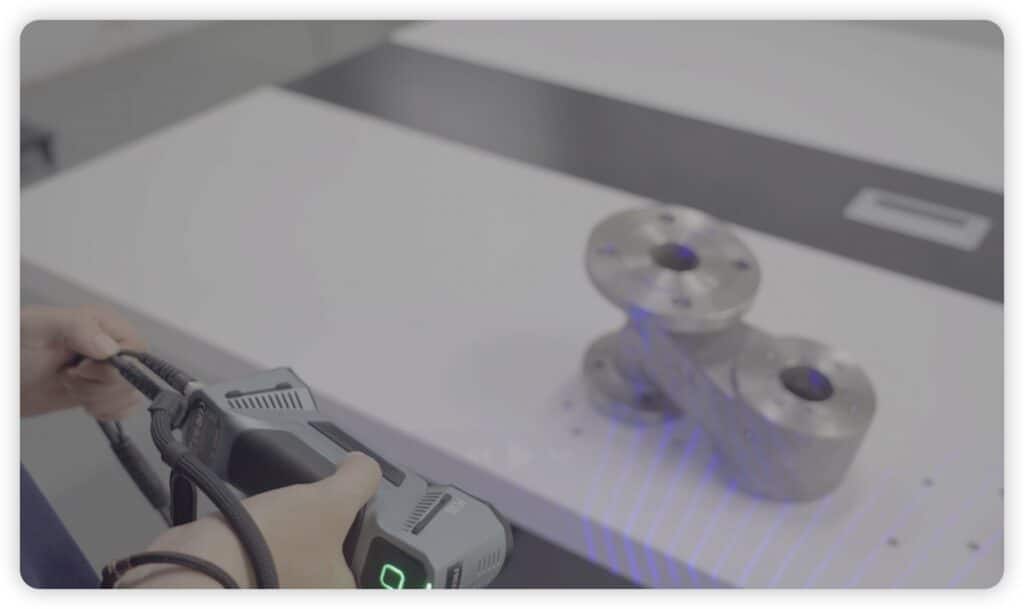
3D models & fit checks
Review connections, installed length, actuator envelope and access before the valve reaches site.
- Existing valve drawing or installation dimensions
- Pipe connection and orientation
- Required model format and space constraints
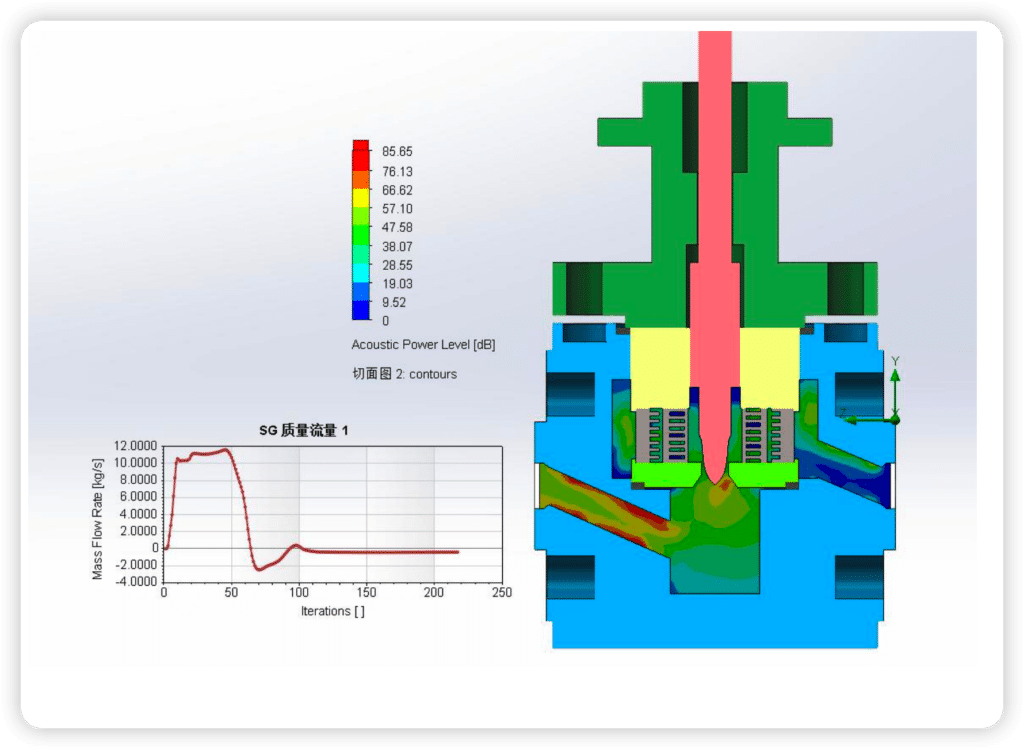
Simulation & design review
Define the engineering question and use analysis to compare relevant design options.
- Flow-path and pressure-drop questions
- Thermal expansion and sealing considerations
- Geometry, material data and boundary conditions
Discuss your application
Need help selecting or specifying a valve?
Send a datasheet, drawing or operating conditions. Tell us whether you need valve selection, a 3D installation check or a simulation study.
- Process: medium, flow cases, pressure and temperature
- Installation: size, connections, dimensions and available space
- Acceptance: standard edition, leakage requirement and inspection scope
- Support: selection, drawing/model review or simulation objective
If you do not have a complete datasheet, send the process information and drawings available.
Frequently asked questions
Valve specification questions
Does API 609 mean that a butterfly valve is fire tested?
No. State the product requirement and the required fire-test qualification separately. Ask for the applicable report and check its coverage against the valve being supplied.
Is API 622 evidence that the complete valve meets an emissions requirement?
API 622 addresses packing testing. Check the complete-valve requirement separately, using the applicable API 624, API 641 or ISO 15848-1 qualification basis.
Which edition should I put in the purchase order?
Use the edition required by the project specification, including the agreed amendments and errata. If the requirement is unclear or conflicts with another document, resolve it before manufacture and inspection.
Can I select a valve from the standard number alone?
No. Provide the valve function and operating conditions as well as the construction, dimensional and testing requirements. A single reference rarely defines the complete valve and actuator assembly.
Can THINKTANK help with a replacement valve?
Yes. Send the existing datasheet, drawings or nameplate information, the installed dimensions and the current operating conditions. Include any problems with control, leakage, reliability or available space.
What should I send for a 3D model or simulation request?
For a model, identify the valve configuration, connections, actuator and intended use of the file. For analysis, describe the question to resolve and provide available geometry, fluid and material data, operating cases and acceptance criteria. We can help identify missing inputs.
Are the full standards available on this page?
The links lead to publication information from the standards bodies and their distributors. Use the full specified edition for test procedures, numerical limits and acceptance criteria.
Are API 598 and ISO 5208 interchangeable?
Do not assume equivalence from the standard names. Check the valve product standard and compare the applicable test procedures, conditions and acceptance criteria. Any proposed substitution should be resolved in the project specification.
Does the same leakage class mean the same result under every test?
No. Interpret a leakage designation together with its governing standard, medium, pressure, duration and applicable valve configuration. Compare the complete test basis rather than the class label alone.
Can a 3D fit check replace a dimensional inspection?
A model helps identify interface and clearance conflicts before manufacture or installation. It does not establish the actual dimensions of the supplied assembly; agree the drawing approval and dimensional inspection requirements separately.
Can simulation prove compliance with a pressure or leakage test?
Simulation can investigate a defined design question under stated assumptions. It does not automatically replace a physical test required by the governing standard or purchase specification.
What replaced ISO 6948, ISO 7841 and ISO 7842?
ISO 5117:2023 combines the current production and performance-test requirements for automatic steam traps. It replaces the three withdrawn references. Read the ISO 5117 overview →